
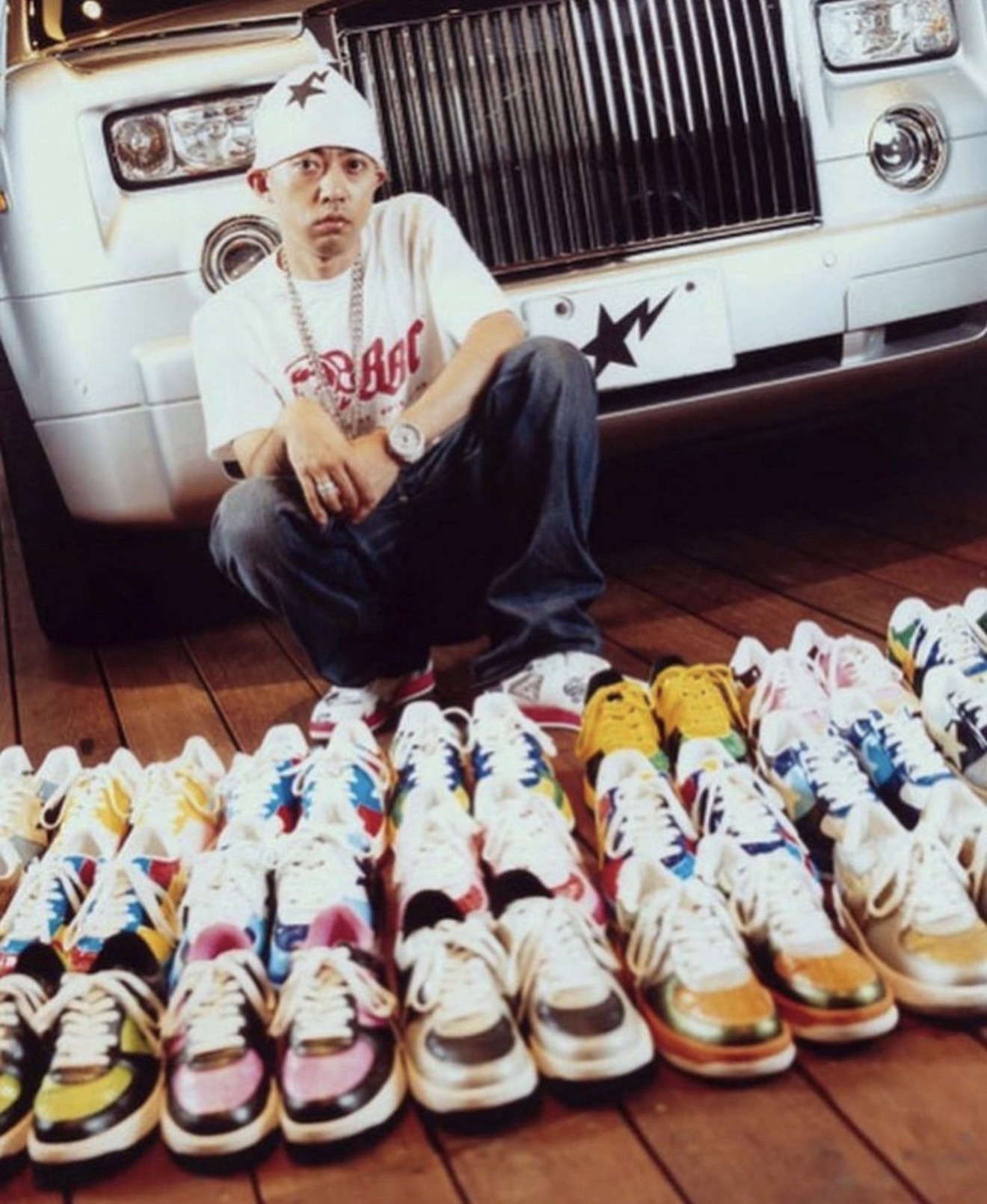
From Homage to Icon: The Evolution of the BAPESTA and It’s Lasting Impact on Sneaker Culture

The term “iconic” often gets tossed around with little thought, but when it comes to A Bathing Ape (BAPE), few would argue that the label doesn’t deserve the title. Founded in 1993 by DJ and designer Nigo, BAPE quickly established itself as a cornerstone of global streetwear, influencing fashion, culture, and even the way brands operate. From its signature camo prints to the full-zip shark hoodies and the playful Baby Milo range, BAPE has a track record of creating products that leave a lasting impact. But perhaps one of its most significant contributions is the BAPESTA sneaker—a shoe that has become a cultural phenomenon in its own right.
The Birth of BAPESTA: A Respectful Nod to the Air Force 1
In 2002, nearly a decade after founding BAPE, Nigo decided to take the brand in a new direction by venturing into footwear. The result was the BAPESTA, a sneaker that drew clear inspiration from one of hip-hop’s most iconic shoes: Nike’s Air Force 1. By then, the Air Force 1 had already spent two decades solidifying its place as a staple in both basketball and street culture. But rather than simply copying the design, Nigo crafted the BAPESTA as a tribute to the Air Force 1, tailored specifically for the lifestyle and aesthetic of the hip-hop community he was so deeply connected to.

The BAPESTA was not intended as a basketball shoe, like the Air Force 1, but rather as a lifestyle sneaker. Nigo swapped out Nike’s swoosh for BAPE’s shooting star logo, replaced the “Air” branding on the midsole with “Ape” or “Bape,” and used glossy patent leather in vibrant colors to give the sneaker a bold, eye-catching look. These tweaks made the BAPESTA a unique statement piece that resonated strongly within hip-hop circles, particularly among fans of the Air Force 1 who were looking for something fresh yet familiar.
A Sneaker That Defined an Era
As BAPE continued to grow, so did the popularity of the BAPESTA. The sneaker quickly became a sought-after item, especially as Nigo began to collaborate with influential artists and brands like KAWS, Kanye West, and Marvel. These partnerships only heightened the BAPESTA’s allure, turning it into a must-have for any serious sneakerhead. By the mid-2000s, the BAPESTA had become a fixture in hip-hop fashion, thanks in part to endorsements from stars like Pharrell, Kanye, and Soulja Boy. A memorable moment in the BAPESTA’s rise came in 2006, when a public feud between Lil Wayne and Clipse over who wore the brand first highlighted just how deeply ingrained the sneaker had become in hip-hop culture.


Despite its obvious similarities to the Air Force 1, Nike never took legal action against BAPE. Instead, as Matt Mason explains in his book The Pirate’s Dilemma: How Youth Culture Is Reinventing Capitalism, Nike allegedly decided to invest in Nigo’s company rather than sue him. Whether or not this theory is true, it’s clear that Nike recognized the genius behind Nigo’s design choices. In fact, Nike even began to draw inspiration from BAPE’s use of bold colors and unconventional materials, tapping into a market that had largely been ignored up to that point.
Beyond the BAPESTA: Nigo’s Reinterpretation of Classics
Nigo’s creativity didn’t stop with the BAPESTA. Over the years, he continued to put his unique spin on other classic sneakers, introducing models like the Chuck Taylor-inspired APESTA, the Air Max-inspired ROADSTA, and the Superstar-inspired SKULLSTA. Each of these designs carried the same disruptive energy that had made the BAPESTA so successful. Initially, there was some skepticism—Pusha T famously recalled friends dismissing the BAPESTA as “fake-ass Nikes”—but the sneaker’s distinct design and cultural significance quickly won over critics.


The BAPESTA’s Lasting Legacy
The BAPESTA’s influence extends far beyond its original release. Even today, the sneaker remains a symbol of Nigo’s innovative vision and BAPE’s lasting impact on both streetwear and sneaker culture. The sneaker has continued to evolve, with recent collaborations and re-releases keeping it relevant in a constantly changing market. For example, KITH’s Ronnie Fieg gave the BAPESTA a special-edition makeover, and BAPE recently reintroduced a pack of “Cotton Candy” BAPESTAs. The brand also released a women’s-exclusive pack of Double BAPESTAs, playing on Nike’s recent trend of excessive logos and branding.
The BAPESTA also inspired other designers to follow in Nigo’s footsteps. In 2015, Heron Preston took the concept of the “bootleg” sneaker to new heights by creating his own Gucci-inspired Air Force 1 with BAPESTA branding, a testament to the lasting influence of Nigo’s original design.


A Future for BAPESTA
As Nike continues to push the Air Force 1 into new territories with modern executions and collaborations, the BAPESTA’s legacy is far from over. With hip-hop icons like Travis Scott and Future keeping BAPE footwear in the spotlight, and BAPE scaling back its footwear output in recent years, the timing seems ripe for a grand reintroduction of the BAPESTA. Nigo’s creation has already cemented its place in sneaker history, but it’s clear that the story of the BAPESTA is far from finished.
In the end, the BAPESTA is more than just a sneaker—it’s a symbol of a cultural movement, a reflection of Nigo’s genius, and a testament to the power of streetwear to shape the world of fashion. From its beginnings as a respectful nod to the Air Force 1 to its current status as a streetwear icon, the BAPESTA has proven that sometimes, a little imitation can lead to something truly original.

Leave a Reply