
From Graffiti to Garments: Formichetti’s PDF Transmission

In Italy, fashion usually flows upward—from artisanal workshops to the runways of Milan, from the codes of tradition to the promise of luxury. Domenico Formichetti flipped that current.
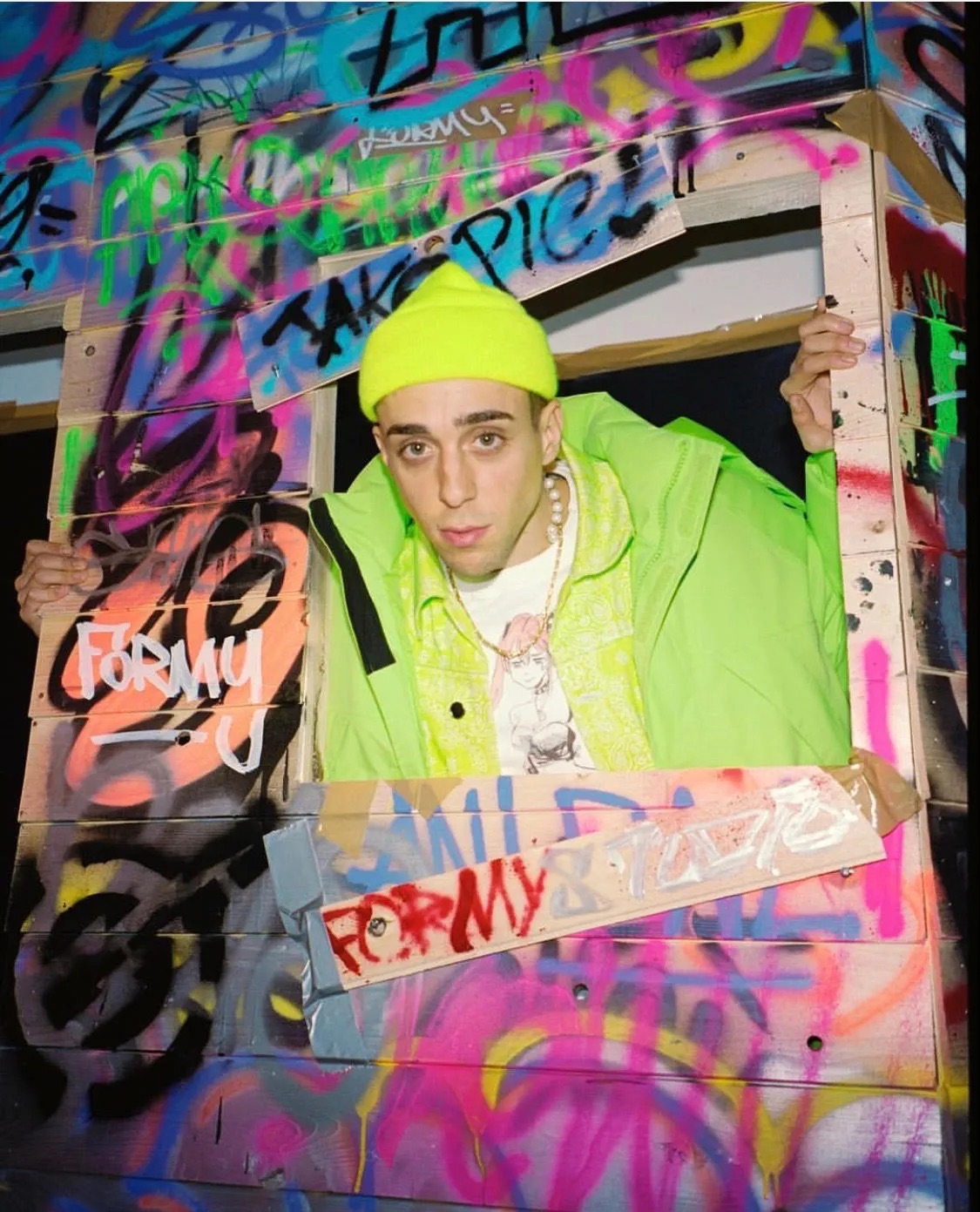
Born in 1993 in Chieti, a small city nestled in the Abruzzo region of Italy, Formichetti’s fashion journey didn’t begin with sketches or mood boards. It started with spray paint. He came up as a graffiti writer, developing an eye for bold graphics and quick, disruptive visuals. He understood early that design wasn’t about subtlety—it was about presence. Before fashion entered the picture, he was immersed in skate videos, MTV rap culture, motocross aesthetics, and snowboard gear from the late ’90s and early 2000s. These references didn’t come from trend forecasting—they came from growing up plugged into the world through screens, streets, and subculture.
When he moved to Milan, Formichetti enrolled in courses at the Brera Academy and NABA (Nuova Accademia di Belle Arti), two of the city’s major art institutions. But he dropped out, dissatisfied with the rigid, theoretical structures. What he needed was tactility. He took jobs inside factories in Northern Italy—denim labs, production studios, textile facilities—learning how garments are actually built. Not conceptually, but physically.

That DIY spirit fueled his first brand, Formy Studio, launched in 2018. With co-signs from Italian trap stars like Ghali and Sfera Ebbasta, and international names like Tyga, Swae Lee, and J Balvin, Formy was a success by almost every metric. But Formichetti shut it down in 2022. The brand had become a vessel for other people’s image—but not his own. He needed a new channel. So he built one.
In 2023, he launched PDF Channel a reference to broadcasting. This wasn’t just a brand; it was a signal. PDF was built to reflect Formichetti’s own needs, his aesthetic holes, and the garments he couldn’t find anywhere else. He called it “hybrid culture”—a collision of early-2000s hip-hop silhouettes, graffiti-coded color palettes, snowboarding and motocross gear, and traditional Italian manufacturing. This wasn’t fashion meant for industry approval. It was meant for his friends, his crew, and anyone tapped into the same cultural current.
PDF’s clothes are all made in Abruzzo, close to where he grew up. This isn’t a marketing tactic—it’s a design decision. By staying local, Formichetti retains complete control over production. It’s allowed him to build out technical pieces with highly specific treatments: bleached and laser-finished denim, oversized outerwear with Dainese-grade hardware, pigment-sprayed T-shirts, distorted camouflage suits, and cardboard-inspired sculptural pieces. Nothing is clean. Everything feels lived-in.


The silhouettes are unapologetically baggy—referencing the oversized proportions of early-aughts American streetwear but rendered through high-quality Italian textiles. A PDF coat might drape like a Helmut Lang archive piece, but it’s designed to be worn with Timberlands, headphones, and a blunt in hand. It’s fashion for the high-functioning outsider.
Formichetti’s runway debut came during Milano Fashion Week FW25, and it didn’t just disrupt—it detonated. The show, titled “United Jam,” was held in a white, gallery-style room filled with mundane props: fire hydrants, skateboards, concrete blocks, road signs. At first glance, it looked sterile—almost clinical. Then the chaos began.
Halfway through the show, a group of Milanese graffiti writers—dressed in all-white overalls—rushed in and began tagging the set in real time. The music shifted from soft ambient textures to bass-heavy Italian trap and early-2000s hip-hop. The models walked through this shifting space, caught between architecture and anarchy. The clothes reflected this duality. There were puffer coats sculpted like armored shells, pants that looked like snowboard gear melted into military wear, jackets made from old racing materials, and tees with scribbled lettering and DIY graphics. Cardboard tanks were layered over shirts. Bandanas were worn like relics from a forgotten mixtape cover shoot. The energy wasn’t nostalgic—it was survivalist. Fashion built for a generation raised in algorithms, yet allergic to their control.
Since its launch, PDF has moved with unrelenting speed. It’s now stocked at high-tier boutiques including Ssense, The Webster, Nubian Tokyo, Slam Jam, and Antonioli. The brand brings in seven-figure revenue with no corporate backers, relying on direct sales and small-batch distribution. Despite its DIY roots, PDF is globally viable. That tension is part of its power.
The list of PDF wearers is just as eclectic as the brand itself: Drake, Rihanna, Central Cee, Lewis Hamilton, Lil Yachty, Mahmood—a mix of mainstream visibility and underground cachet. When Drake posted a gifted pair of PDF sneakers, sales spiked. When Central Cee wore PDF pants in a campaign, the waitlist grew. But Formichetti has resisted hype cycles. There’s no playbook. No rigid seasons. Just drops when the work is ready.

This flexibility allows Formichetti to build pieces at his own rhythm. He’s focused less on market validation and more on community alignment. His Instagram account documents his orbit: late-night shoots, graffiti runs, meals with friends, helipads, Paris trips, parties, pick-ups, and prototypes. It’s not curated. It’s ongoing.
Formichetti isn’t trying to be the next Virgil or Heron. He’s building something different—something slower, messier, and more personal. PDF isn’t about catching trends. It’s about building a tribe. Formichetti proved in Milan PDF isn’t referencing the culture. It is the culture.
Leave a Reply