
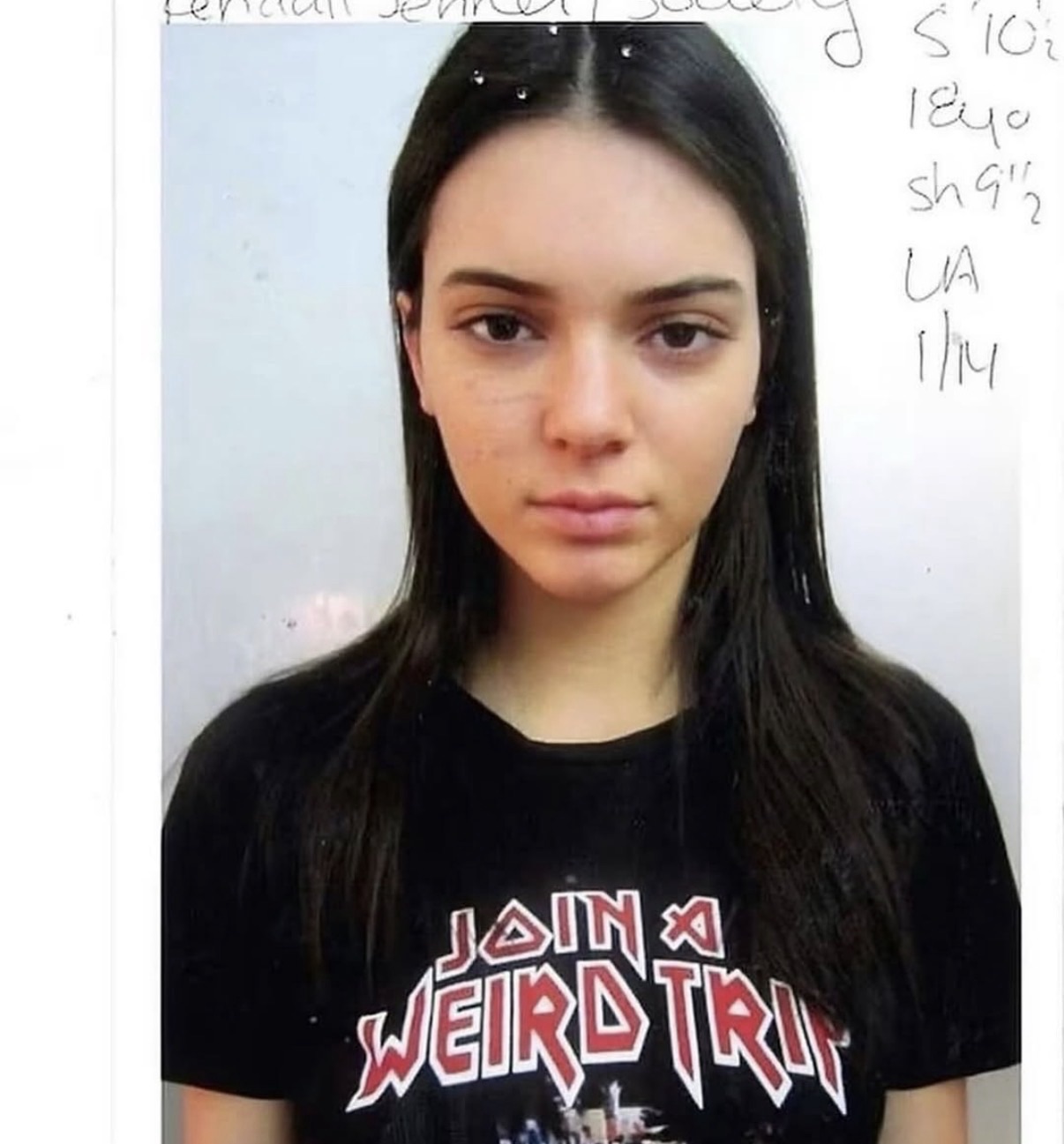
How early photographs, unlikely beginnings and chance encounters created the foundations of modern modeling.

The earliest images in a model’s career carry a kind of quiet honesty. Before the runway lighting. Before the campaigns. Before the gloss of a press cycle. These first polaroids exist in the space between who they were as teenagers and the global figures they would become. They reveal the conditions that shaped them. The regions they came from. The families that raised them. The specific encounter or moment that opened the door into an industry that still depends on instinct and timing. The story of each model begins long before the fame arrives, and that is where the real texture lives.

Kendall Jenner grew up in Calabasas in a house already familiar to television, yet her entry into modeling followed a traditional path. She signed with Wilhelmina Models at thirteen after a portfolio session with Nick Saglimbeni that presented her in a new way. Her first paid jobs were for Forever Twenty One and Teen Vogue, work that required early discipline and long hours on set. Those small assignments prepared her for the larger shift that would come later when she joined The Society and moved into international runway seasons. Her net worth would eventually grow into the tens of millions, but the foundation was built on those quiet learning years when she was still being treated as a new face.

Bella Hadid grew up in Santa Barbara with the identity of an equestrian before she ever imagined fashion. Her early life was shaped by competitive riding until Lyme disease changed her path and forced her to slow down. Modeling began with local lookbooks for California brands and small shoots with independent photographers. When she signed with IMG in 2014 she moved quickly. Within one season she was walking in New York and gaining momentum through editorials and campaigns that favored her structure and self contained presence. Her earnings would eventually place her among the highest paid models of her generation, but the early story is about recovery, redirection and a switch from athletics to visual work.

Adriana Lima came from Salvador in Bahia and entered the Ford Supermodel of Brazil contest almost by accident. She won the national competition, placed second globally and moved to New York as a teenager. Those first years were focused on catalog work and early runway shows, but her breakthrough arrived when Guess cast her in a major campaign. That visibility opened a path into Victoria’s Secret and a long commercial career that eventually led to one of the highest cumulative earnings in modern modeling. Her origin story remains striking because it began in a modest neighborhood in Bahia with no intention of becoming a model at all.

Salma Hayek started in a different corner of the industry. She was raised in Veracruz, studied acting in Mexico City and built early fame through the telenovela Teresa. When she moved to Los Angeles she carried a portfolio of headshots rather than model digitals, but the principle was the same. She had to start again in a city that told her she would not succeed with her accent. She studied acting with Stella Adler, worked on her language and rebuilt her career one audition at a time. Her net worth eventually grew into film star territory, but her origin sits within the same framework of early photographic documentation and gradual ascent.

Chanel Iman grew up in Los Angeles with a mixed African American and Korean background and started modeling as a child. She entered Ford’s Supermodel of the World contest as a teenager and placed in the top three, which immediately positioned her as a promising candidate for runway work. Teen Vogue embraced her at a formative moment and used her on covers that introduced a new generation of American models. Those early covers helped her transition into major runways in New York, Milan and Paris. She later built a strong commercial and editorial balance that expanded her earning power and placed her in a long line of American models who shaped the two thousands.

Lily Aldridge grew up in Santa Monica in a creative family where art direction, music and photography were part of daily life. Her father was a well known illustrator and her mother a former model, which meant she understood images before she entered the industry. She was sixteen when she booked her first campaign for Abercrombie and Fitch. Spanish Vogue placed her on a cover at a very young age, and she built a steady commercial career through American retailers before moving into Victoria’s Secret. Her financial success eventually followed the same commercial route, grounded in mass market relevance rather than sudden viral fame.
Doutzen Kroes came from Eastermar, a small Frisian village in the Netherlands, where she expected to follow her parents into skating. She sent her photos to a Dutch agency on a whim in 2003 and was in New York within months. She appeared in Victoria’s Secret catalogues almost immediately and developed a loyal following for her athletic build and quiet personality. A Vogue readers poll named her Model of the Year in 2005 and confirmed her place in the industry’s attention cycle. Her later contracts, especially fragrance and lingerie, produced one of the strongest financial arcs of any European model of her era.

Karlie Kloss was raised in St Louis and trained in ballet, which shaped everything about her posture and movement when she was discovered at thirteen. A local editorial titled Almost Famous gave agencies the proof they needed to push her to clients. Within two years she was walking sixty plus shows in a single season. Her walk became a signature, her reliability a benchmark, and her presence turned her into a generational figure. By her late teens she was already earning at a level most models never reach, helped by both high fashion and commercial partnerships.

Rosie Huntington Whiteley came from a farm in Devon and entered the industry almost by accident while doing work experience at Profile in London. She signed soon after and shot her first campaign for Levi’s while still a teenager. Teen Vogue introduced her to the American market, and a runway appearance with Naomi Campbell added early credibility. She built her career slowly through editorial, catalogue and lingerie before becoming a cornerstone of Burberry campaigns. Her later shift into film and entrepreneurship expanded her income far beyond typical modeling paths, though the early story remains rooted in a rural background and a quiet entry into London’s fashion ecosystem.

Hilary Rhoda grew up between Maryland and New York with strong athletic interests. She played field hockey at a competitive level and had college offers before modeling took her in a new direction. She was discovered at a ProScout event, signed soon after and booked early work for Abercrombie and Hollister. Moving to IMG changed her trajectory and positioned her for the Estée Lauder contract that marked her as a luxury face. That contract produced long term financial stability and defined her image for more than a decade.

Miranda Kerr grew up in Gunnedah in rural New South Wales and won a contest with Dolly magazine as a young teenager, which sparked debate in Australia about age and representation. She later joined Chic Management, became a recognized face within the surf and swim markets and eventually moved to New York to pursue larger opportunities. Victoria’s Secret transformed her public profile and placed her among the highest earning commercial models of the two thousands. Her later work in wellness and beauty expanded her income far beyond fashion, though the first chapter remains tied to a magazine contest she entered as a schoolgirl.
These stories build a mosaic of how models emerge. Some come from major cities. Some come from villages with no connection to fashion. Some arrive through contests. Some are scouted on sidewalks. Some survive illness or career pivots. Some grow up inside creative families. The early polaroid becomes a record of who they were before everything accelerated. It marks the moment when possibility began to form around them.
In the end their careers diverge across editorial, commercial, film, business and influence, and their net worths now range from several million to tens of millions, shaped by contracts, brand ownership, longevity and the eras they dominated. Yet the beginning remains the same for all of them. A clean wall. Natural light. A face without styling. A simple photograph that captures a version of them the world had not yet learned to recognize.
Leave a Reply