
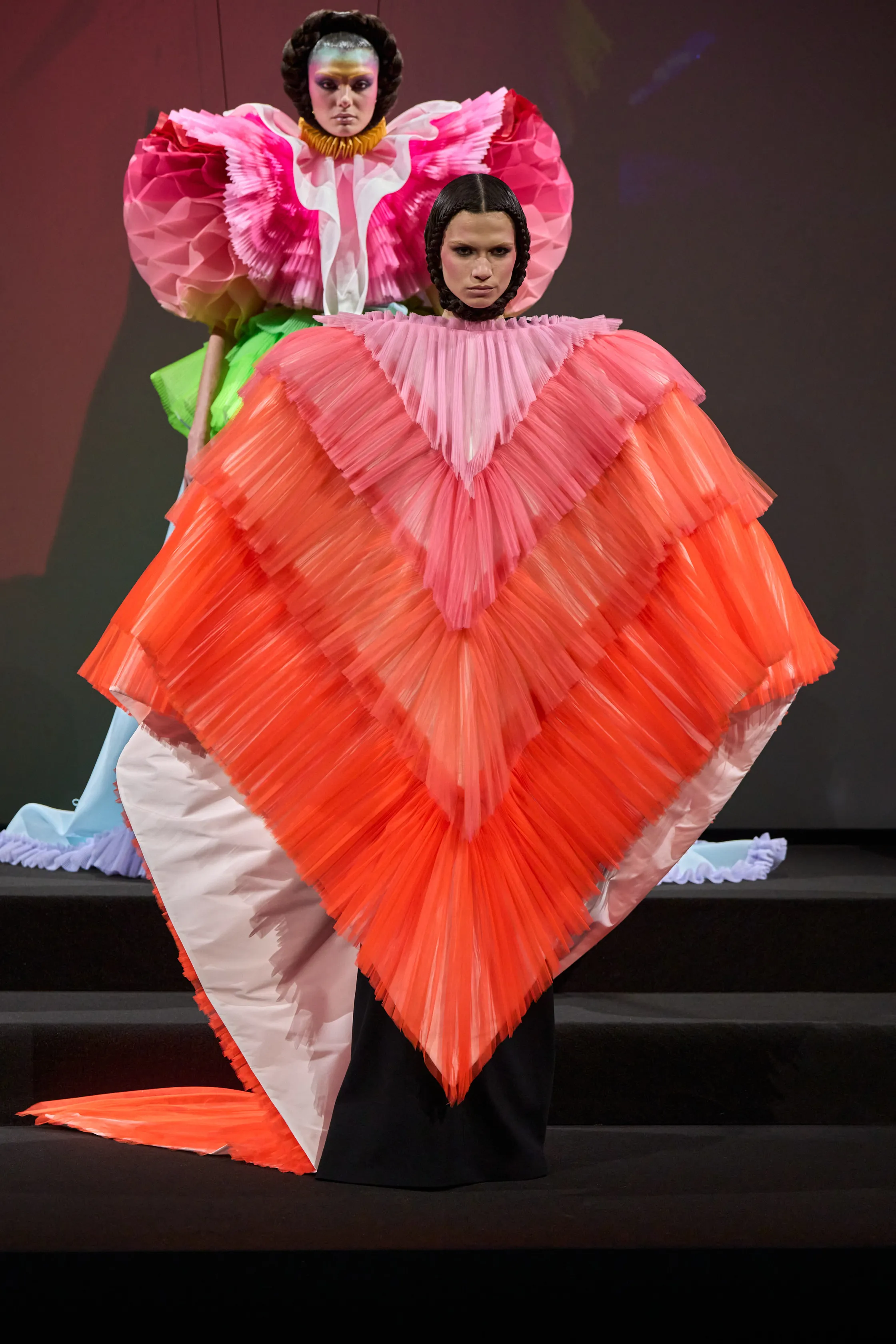
Viktor & Rolf Spring 2026 Couture


Vikror Horsting and Rolf Snoeren returned to the couture stage with Diamond Kite, a Spring 2026 collection that unfolded less like a runway show and more like a carefully constructed object coming into existence. Fifteen looks appeared one by one, each grounded in black and interrupted by a single burst of color in tulle. Rather than overwhelm, the restraint sharpened the focus. This was couture reduced to a system.
At first glance, the garments read as sculptural black dresses shaped by strict silhouettes. Satin, crepe, and gazar formed clean bases that felt architectural and still. What disrupted them were removable elements in bright hues, pleated bands, ruffled structures, inflated sleeves, and graphic arcs of tulle that attached, detached, and migrated as the show progressed. The clothing was never static. It was designed to be altered in real time.
One of the clearest examples was a black gown anchored by an oversized pink pleated collar that framed the neck and shoulders like a sculptural halo. The contrast was sharp and deliberate. Without the color, the dress returned to a severe column. With it, the entire posture shifted. Another look paired a flowing black silhouette with pale blue tulle cascading from the shoulders, trimmed with pleated edging that emphasized movement as the model descended the steps.
A hooded black dress appeared heavy and inward at first, its drape pulling the body downward. When layered against the growing accumulation of color behind it, the silhouette transformed into something graphic and expansive. A final black look with soft structure and light blue accents felt almost ceremonial, its volume controlled, its color precise.
The logic of the collection revealed itself slowly. Each colorful piece removed from earlier looks was placed onto a single model, building upward and outward until she became the kite itself. Pleated pinks, yellows, blues, and greens stacked and interlocked, forming a diamond shape complete with a trailing bow adorned tail. The transformation was cumulative rather than sudden. What began as individual garments resolved into a single suspended form.
This approach marked a shift from past Viktor & Rolf couture presentations, which often leaned toward excess, irony, or visual overload. Here, the humor was quieter and the construction more disciplined. The performance served the clothes, not the other way around. Every element had a function within the system, and every garment was complete on its own before becoming part of something larger.
Diamond Kite was not about illusion or escape. It was about assembly. About how couture can be built piece by piece, worn, removed, reconfigured, and still hold its shape. In returning to the stage, Horsting and Snoeren did not amplify their theatrics. They refined them. The result was a collection that treated couture as both clothing and structure, grounded first, airborne only at the very end.
Leave a Reply