While Fashion Releases Look Books, Colm Dillane Builds Worlds


For years, fashion campaigns have followed a familiar formula. Collections are photographed in carefully controlled environments, celebrity placement generates headlines, and products remain at the center of attention. Even as brands increasingly reference storytelling, many campaigns still function as advertisements first and narratives second. Colm Dillane has spent much of his career operating outside of that structure, approaching fashion less as clothing alone and more as one part of an expanding creative universe.
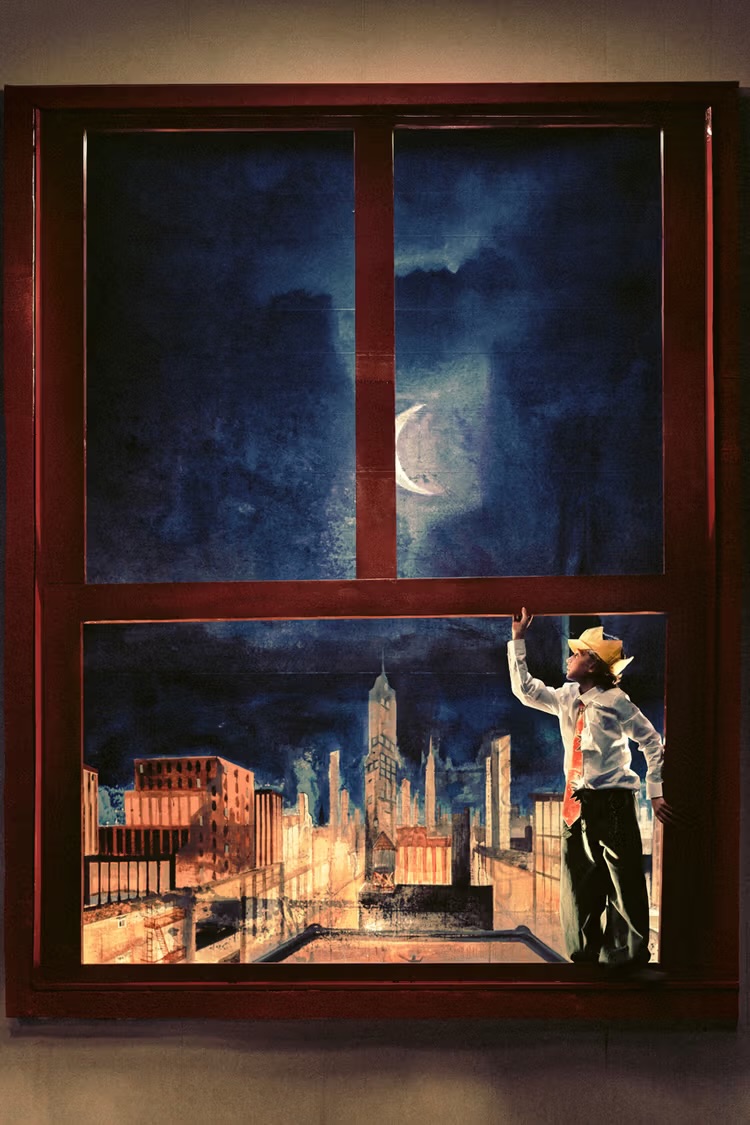
With Spring/Summer 2026, The Boy Who Jumped The Moon, that philosophy reaches one of its clearest expressions yet. Originally shown during Paris Fashion Week, the collection returns through an ambitious campaign anchored by a cinematic short film that feels closer to illustrated literature than traditional fashion marketing. Rather than centering viewers around garments alone, the project builds an entire mythology around aspiration, imagination, and the pursuit of impossible ideas.
At the center of the story is a boy who dreams of reaching the moon. Determined to accomplish something no one around him believes possible, he constructs strange machines from balloons, kites, and discarded engines. Most fail, yet every failed attempt brings him slightly closer until eventually an entire city begins contributing to his ambition. Against all expectations, the boy reaches the moon and somehow returns home. What begins as one person’s impossible dream gradually transforms into something larger, as witnessing the achievement causes others to begin pursuing ambitions they once believed unreachable themselves.
That message feels especially relevant within contemporary creative industries where originality often competes against algorithms, trends, and pressure toward sameness. In many ways, The Boy Who Jumped The Moon quietly becomes a reflection of KidSuper itself. For years, Dillane has built a brand existing somewhere between fashion label, art project, performance, entertainment company, and creative experiment. What initially appeared unconventional gradually became one of the brand’s strongest differentiators. While many labels optimize familiarity, KidSuper repeatedly invests in unpredictability and imagination.
That investment appears throughout every aspect of the campaign. Unlike traditional luxury campaigns built through polished minimalism or heavy digital intervention, The Boy Who Jumped The Moon unfolds across five hand painted worlds created by artist Niels Egidius, with direction from Shay Latukolan and photography by Sebastian Boon. The environments embrace visible craftsmanship rather than perfection, creating the feeling of stepping inside an illustrated storybook rather than viewing a seasonal release. At a moment when creative industries are increasingly flooded with polished imagery produced at extraordinary speed, those imperfections carry weight because they reveal human involvement.
The campaign also refuses to flatten its characters into aesthetic devices. Every figure inhabiting this world possesses a distinct identity and obsession. Debbie attempts to recreate the impossible through scientific experimentation. Giselle paints stairways into the sky. Marlotte approaches reaching the moon through discipline and persistence. Others become dreamers, lovers, workers, or believers. Their differences matter because the story suggests there is no singular route toward extraordinary ideas. Everyone reaches for impossible things differently.
Fashion rarely dedicates this level of attention toward narrative architecture surrounding collections, which is what ultimately separates KidSuper from much of the industry. The garments do not simply accompany the story. They exist because of it. Clothing becomes one component within a larger ecosystem of characters, environments, and ideas.
This increasingly reflects where consumer attention is moving beyond fashion as well. Audiences no longer engage with brands only through ownership. They engage through participation, identity, mythology, and community. The strongest contemporary brands create emotional ecosystems around products, allowing people to buy into meaning rather than objects alone.
That may explain why KidSuper continues occupying a space larger than many labels with greater resources or longer histories. The audience is not only purchasing clothing. They are participating in imagination itself. Dillane has previously spoken about wanting to create a children’s book, describing this project as that dream realized, except “the pages walk.” The statement sounds playful, though it reveals something important about the campaign. Children’s stories have always functioned as vehicles for impossible thinking, while adulthood often encourages limitation and practicality.
The Boy Who Jumped The Moon challenges that instinct. As luxury increasingly competes for shrinking attention spans, campaigns centered only around exclusivity or aspiration risk becoming interchangeable. The brands most likely to endure may be those capable of creating worlds expansive enough for people to see themselves inside. Fashion campaigns have spent decades attempting to sell dreams, while KidSuper appears more interested in exploring what happens after people begin believing them.
Explore the film “The Boy Who Jumped The Moon If He Could, Why Couldn’t They?” below.