Experience Hikari no Yami Chapter 10 “Shiki”


Hikari no Yami’s latest presentation unfolded high above the city on the 26th floor penthouse at 575 Madison Avenue, a setting suspended between isolation and exposure. Removed from street level, the space felt sealed off from ordinary time, reinforcing the collection’s meditation on detachment and systemic collapse. From that altitude, the city became distant, almost unreal, mirroring the show’s suggestion that the structures governing everyday life are more fragile than they appear.
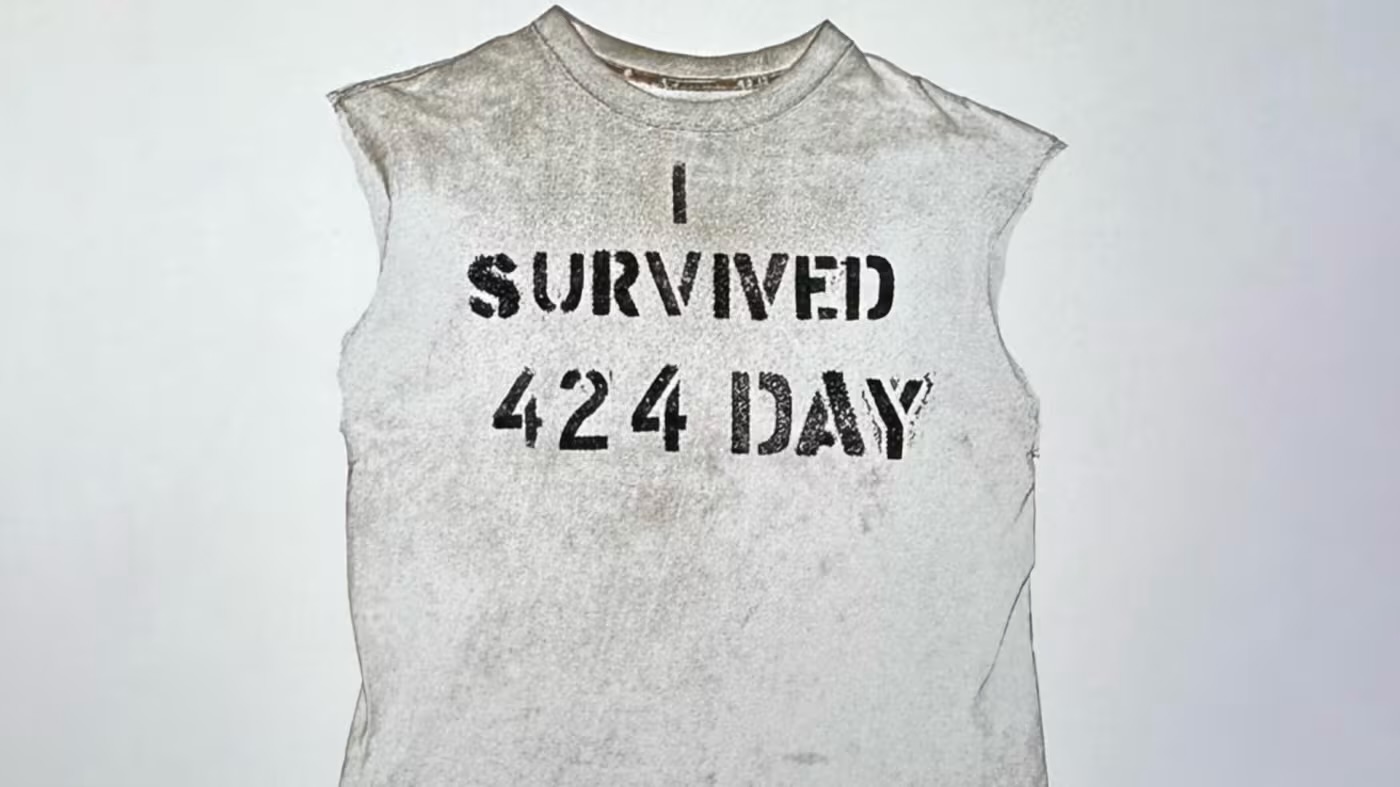
Titled Chapter 10, the collection draws from Fuyumi Ono’s Shiki, using the story’s atmosphere of dread as a framework to examine fashion’s predatory cycles. In Japanese, “Shiki” in this context is written as 屍鬼, meaning corpse demon or death spirit, a reference to beings that exist between life and death. Rather than presenting them as monsters, the narrative treats them as reflections of humanity, figures condemned simply for existing outside accepted norms. Whitaker translates this idea into clothing that questions who is allowed visibility and who is pushed to the margins, framing survival itself as a form of rebellion.
For the first time, color enters the Hikari no Yami universe, though in a restrained palette of black, white, grey, and red that reconnects to Jakarie Whitaker’s origins. Red appears as rupture rather than ornament, cutting through the monochrome like a warning signal. Materials remain rooted in reclamation, with deadstock Japanese cottons, wool, nylon, and blended fabrics carrying traces of previous lives. Each garment feels recovered rather than newly produced, reinforcing the idea that nothing exists without history.
Silhouettes continue the dialogue between Japanese design philosophy and American streetwear. Wide cut denim anchors the collection, while patchwork constructions dissolve distinctions between refinement and utility. Traditional tailoring is deconstructed into something provisional, suggesting clothing as an evolving object shaped by wear and reconstruction rather than a finished product.
Footwear extends the narrative through a collaboration with Dr. Martens, supported by the brand. Familiar derby and steel toe forms are recontextualized within the label’s avant garde framework, merging heritage leather craftsmanship with experimental construction. A fabrication partnership with Supima further emphasizes sustainability, combining shirting textiles with denim to create individualized pieces that resist uniformity.
Chapter 10 offers no resolution, only recognition. Whitaker treats fashion as manifesto rather than commodity, using garments to explore identity, chaos, and resistance against systems built on consumption. The revenants of Shiki become symbolic of anyone forced outside sanctioned norms, figures who persist simply by refusing disappearance.
Staged above the city yet grounded in material history, the presentation clarifies Hikari no Yami’s ongoing pursuit of light within darkness. It suggests that disruption can be quiet and embodied, carried in the structure of a garment, and that creation itself can challenge a culture inclined to erase what it cannot easily categorize.