The Ever-Changing Form: Hussein Chalayan’s Vision of Fashion

Hussein Chalayan has always approached fashion differently. From the beginning, he was less concerned with trends and more interested in transformation—how garments could evolve, deconstruct, or tell a deeper story through material and process. His work isn’t just about clothing; it’s about movement, decay, rebirth, and technology.
One of his earliest and most defining projects, The Tangent Flows, was his 1993 graduation collection. Instead of designing garments in the traditional sense, Chalayan buried silk pieces in the ground, layered with iron filings. For six weeks, nature and time took over, oxidizing the fabric and leaving behind earthy rust-colored stains. When the garments were finally unearthed, they looked like relics—softly decomposed, marked by the passage of time.
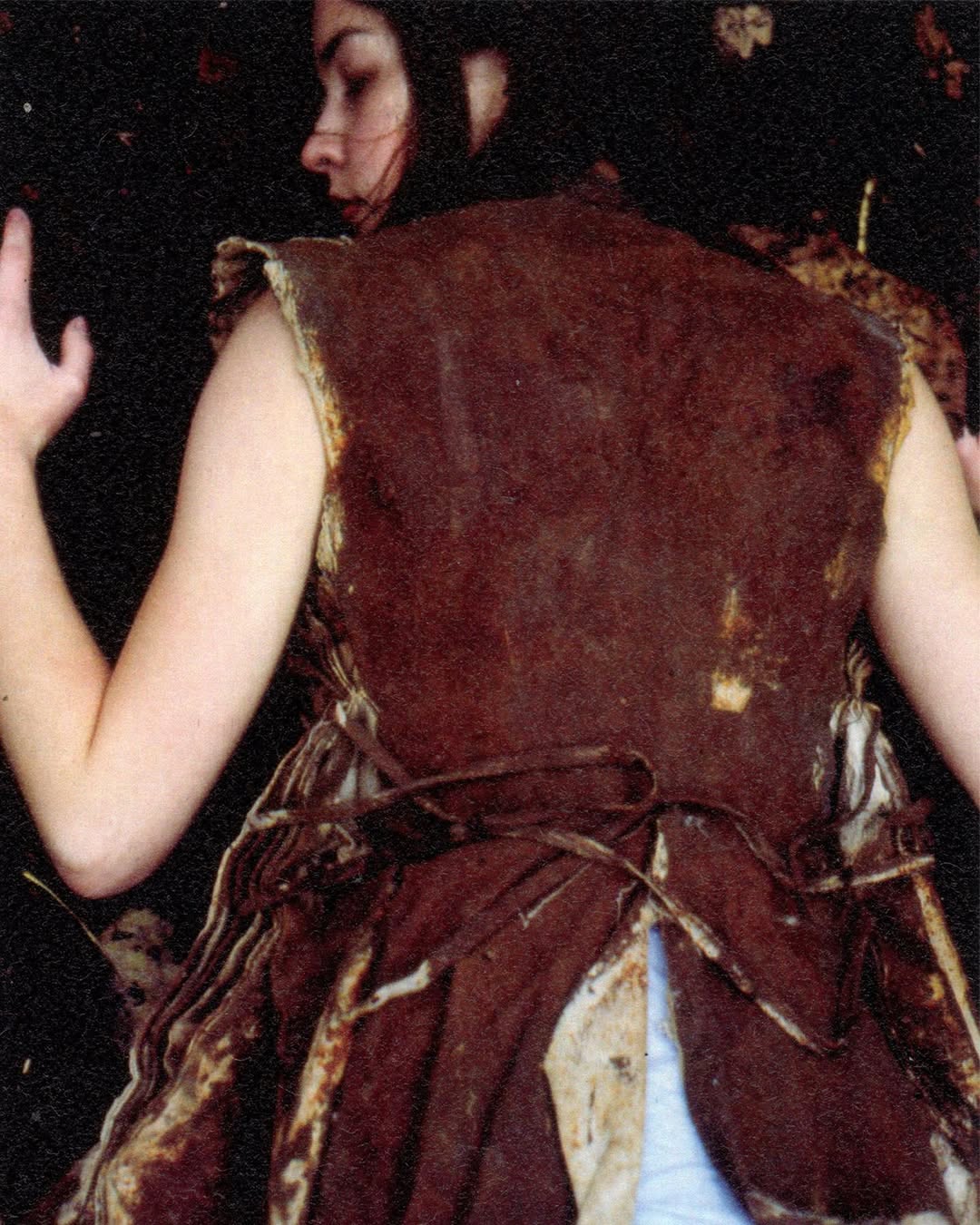


This collection wasn’t just about aesthetics; it was about process. Chalayan used the natural effects of decay to make a statement about fashion’s fleeting nature and the possibility of renewal. He showed that clothing doesn’t have to be pristine to be beautiful—it can carry history, transformation, and even its own destruction as part of its identity.
Throughout his career, Chalayan continued to explore the intersection of fashion, technology, and movement. His Autumn/Winter 2000 collection, After Words, turned everyday furniture into wearable garments. Models stood on stage surrounded by an ordinary living room setup—chairs, a coffee table, a rug. But as the show progressed, these objects weren’t just props; they transformed. A wooden chair lifted off the floor and wrapped itself around a model, becoming a structured dress. A coffee table folded down into a suitcase. The collection blurred the line between clothing and furniture, symbolizing themes of migration and displacement—how people carry their homes with them, physically or emotionally, when forced to leave.


Chalayan’s fascination with transformation extended to technology as well. His Remote Control Dress from Spring/Summer 2000 used aerospace technology to create something never before seen on a runway. The dress, made of fiberglass and resin, was sleek and futuristic—at first glance, it looked static. But with the push of a button, its panels moved and expanded like mechanical wings. Fashion was no longer just about fabric; it was about engineering, motion, and interaction.

Over the years, Chalayan has continued to push boundaries, integrating robotics, laser-cutting, and advanced materials into his designs. But at the core of his work, it’s always been about more than just innovation—it’s about questioning what clothing can be. Can garments evolve with the wearer? Can they tell a story through time and transformation? Can they challenge the way people perceive fashion itself?
For Chalayan, the answer has always been yes.