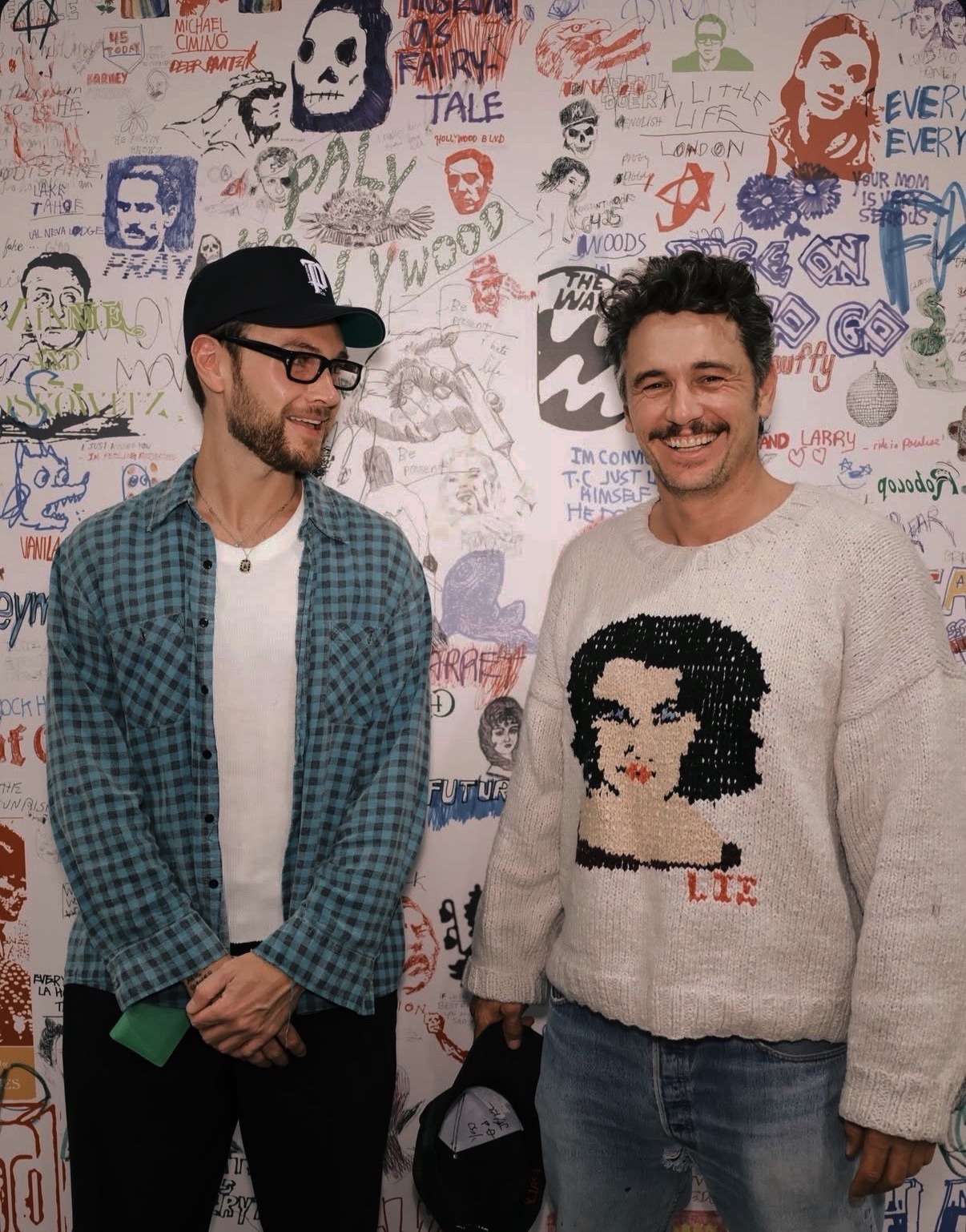
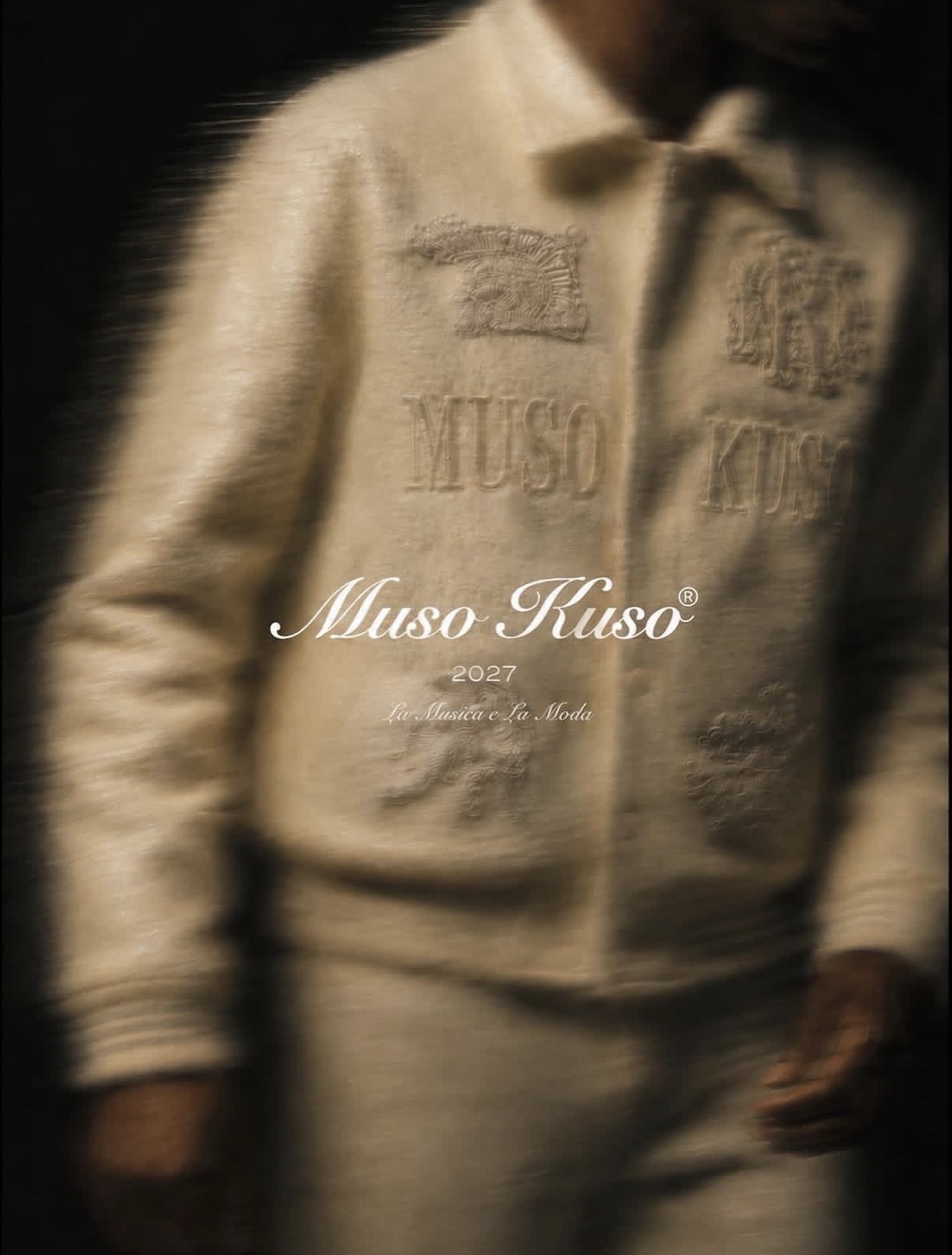
We sit down with Emanuel Ricci to talk Muso Kuso, building a world of his own, and why fashion was only ever the beginning.


For Emanuel Ricci, fashion was never supposed to end with clothing.
The designer behind Muso Kuso spent his early life moving between Italy, France, Belgium, England, Ireland and eventually the United States. Each place introduced a different culture, visual language and way of thinking. Rather than attaching himself to any one of them, Ricci began absorbing pieces of each, developing the perspective that would eventually become central to his work.
“I stopped designing for one audience,” he says. “I design from a global perspective.”
His path into fashion was equally restless. Ricci began with Maison Ricci, an early label that was eventually forced to shut down following a cease and desist. Losing the name could have ended the project. Instead, it forced him to separate his identity as a designer from the identity of the brand he had created.
“Losing Maison Ricci forced me to realize that brands don’t create designers, designers create brands.”
What followed was Muso Kuso.
Built around the freedom to move between cultures, references and disciplines, Muso Kuso became the vehicle for Ricci’s increasingly expansive ideas. Along the way, his work brought him into the orbit of Young Thug, Playboi Carti, Lil Uzi Vert and Kanye West, experiences that reinforced his belief that the most influential creatives rarely wait for the rest of the world to understand what they are doing.
Now, following a showroom in Paris, Ricci is thinking beyond collections altogether. Permanent spaces, experiences and a wider Emanuel Ricci ecosystem are becoming part of the conversation. In his mind, fashion is simply the first language.
713 Magazine spoke with Emanuel Ricci about growing up across cultures, losing Maison Ricci, calling Young Thug, building Muso Kuso, Paris, creative independence and creating something designed to outlive hype.
713 MAGAZINE: Growing up, what were you like as a kid, and where did creativity first show up in your life?
EMANUEL RICCI: I was always curious. I questioned everything and never really accepted that something had to be done one way just because that’s how everyone else did it. Growing up between different countries exposed me to completely different cultures, ways of thinking and aesthetics. Creativity wasn’t something I discovered, it was simply how I interpreted the world. I always wanted to build things that didn’t exist yet.
713 MAGAZINE: You spent your early years moving between different countries, cultures, and environments. Looking back now, how did those experiences shape the way you see the world and the way you approach creativity?
EMANUEL RICCI: Living in Italy, France, Belgium, England, Ireland and eventually the United States taught me that culture isn’t fixed. Every place values different things, so I stopped designing for one audience. I design from a global perspective. Muso Kuso is a reflection of every culture I’ve experienced instead of belonging to just one.
713 MAGAZINE: When did fashion stop being an interest and become something you knew you wanted to dedicate your life to?
EMANUEL RICCI: When I realized fashion wasn’t just clothing, it was language. A collection could communicate ideas without saying a word. Once I understood that, I stopped thinking about making clothes and started thinking about building worlds.
713 MAGAZINE: Looking back, what was the first decision that truly changed the trajectory of your life?
EMANUEL RICCI: Moving to the United States. I left everything familiar because I believed opportunity wasn’t waiting where I was. That decision forced me to bet on myself every single day.
713 MAGAZINE: When Maison Ricci was forced to shut down following the cease and desist, do you think that experience strengthened your conviction or tested it?
EMANUEL RICCI: Both. It tested whether I actually believed in myself or whether I only believed in a name. Losing Maison Ricci forced me to realize that brands don’t create designers, designers create brands. Muso Kuso exists today because of that lesson.
713 MAGAZINE: You’ve spoken about finding Young Thug’s number online and reaching out directly. Looking back now, what gave you the confidence to make that call when most people wouldn’t have even tried?
EMANUEL RICCI: I never saw famous people as unreachable. They’re people first. The worst outcome was someone saying no. Most people stop themselves before anyone else gets the chance. I’ve always believed opportunities belong to the people willing to ask.
713 MAGAZINE: When the doors finally started opening, what surprised you most about the rooms you had spent years trying to get into?
EMANUEL RICCI: I realized that success was only the first step. Once you’re in the room, the focus immediately shifts to legacy, what you’re actually going to leave behind. I also realized I truly belonged there. My international background, speaking five languages, and living across different countries gave me a perspective that very few people in those rooms had. It showed me that I wasn’t just there to participate, I was there to bring something unique.
713 MAGAZINE: Your work has intersected with artists like Young Thug, Playboi Carti, Lil Uzi Vert, and Kanye West. What have those relationships taught you about creativity, ambition, and operating at the highest level?
EMANUEL RICCI: The biggest lesson is that the people operating at the highest level don’t think about trends. They trust their instincts. They move before everyone understands what they’re doing. That’s where real influence comes from.
713 MAGAZINE: The name Muso Kuso has become recognized around the world, but what did it mean to you when you first chose it, and has that meaning changed over time?
EMANUEL RICCI: Originally it represented creating something completely different from everything around me. Today it represents freedom. Freedom to build without limitations, without belonging to one category, one culture or one expectation.
713 MAGAZINE: What emotion sits at the center of Muso Kuso?
EMANUEL RICCI: Dream and curiosity. I want people to fall in love with the garments and the language I’m creating through them. Every piece brings together different cultures, histories, and worlds under one house. Each collection is a dialogue between places, ideas, and emotions that might never have met otherwise. More than making clothes, I’m creating an emotional connection, something people can feel before they can even explain it. When someone wears Muso Kuso, I want them to feel like they’re stepping into a different world. That’s what Muso Kuso is about.
713 MAGAZINE: What is the most personal thing you’ve ever put into a collection that nobody noticed?
EMANUEL RICCI: My DNA is in every collection, in every stitch, every product name, every hour of research and development. Most people see the garments for their aesthetics, but they’re actually chapters of my life. Every collection is inspired by different countries I’ve lived in, different people I’ve met, and different moments that shaped me. The references are deeply personal, even when nobody realizes it.
713 MAGAZINE: What is something you hope never changes about Muso Kuso, regardless of how much it grows?
EMANUEL RICCI: Creative independence. I’d rather grow slower than lose the freedom to build exactly what I believe in.
713 MAGAZINE: What do you think people misunderstand most about Muso Kuso?
EMANUEL RICCI: People think it’s a clothing brand. It’s not. Fashion is simply the first language we’re speaking. The rest is still coming. Muso Kuso is really the foundation of the Emanuel Ricci ecosystem, an idea that’s much bigger than clothing. It’s a platform where fashion is only the beginning.
713 MAGAZINE: Now that the Paris showroom has come to a close, what are you taking away from the experience, both personally and in terms of where you see Muso Kuso going next?
EMANUEL RICCI: Paris proved that people understand the vision. Now the goal is scale. The next chapter is building permanent spaces, stronger experiences and expanding Muso Kuso beyond collections into something people can actually live inside.
713 MAGAZINE: What is something the fashion industry celebrates that you find uninteresting?
EMANUEL RICCI: Hype. I’ve never cared about temporary attention. I’m interested in building brands that still matter twenty years from now.
713 MAGAZINE: What is a belief you hold that most people in fashion would disagree with?
EMANUEL RICCI: Designers shouldn’t just make products. They should build ecosystems. The future belongs to people who create entire worlds, not just collections.
713 MAGAZINE: What is something you’ve lost that you’re grateful you lost?
EMANUEL RICCI: Comfort. Every difficult moment forced me to become more resourceful. If everything had gone according to plan, Muso Kuso probably wouldn’t exist.
713 MAGAZINE: When it’s all said and done, what do you hope Muso Kuso will have contributed to fashion and culture?
EMANUEL RICCI: I don’t want Muso Kuso to simply be remembered as a successful fashion brand. I want it to prove that one independent designer can build an entire cultural ecosystem from dreams, imagination, and hard work alone. If people leave believing they don’t have to follow existing paths, that they can invent their own and build a world of their own, then I’ll feel like I’ve accomplished something much bigger than fashion.
For Ricci, Muso Kuso is still only the beginning. What started with clothing is expanding into a much larger world, one built around the same curiosity, independence, and refusal to follow an existing path that brought him here in the first place.
Discover more from Emanuel Ricci and Muso Kuso at musokuso.com