A 713 Magazine Interview


Before Dee Santiago became a recognizable presence around some of the most influential figures in music and fashion, he was a kid from New Orleans trying to survive an environment that could narrow a person’s future before they had the chance to imagine one.
Born in the Ninth Ward, Dee eventually began spending most of his time uptown after becoming close with his best friend, Killa Day. The Magnolia Projects became another home, bringing with it friendships, conflict and the realities of a street culture Dee says forced him to become stronger. He was a good kid, but by the time he was ten or eleven, trouble had already begun following him.
There were always signs that another life interested him. Five generations of his mother’s family participated in combat sports, and Dee grew up practicing martial arts. Then, in seventh grade, he became obsessed with Prada shoes. Fashion gave him a language that did not exist in the world immediately around him. Wiz Khalifa showed him that getting high and getting dressed could become its own lifestyle. A$AP Rocky and Tyler, the Creator opened the door even wider.
Dee became such a fan of Rocky that he would imagine conversations with him before they ever met. By 2015, he was living with him and having those same conversations in real life.
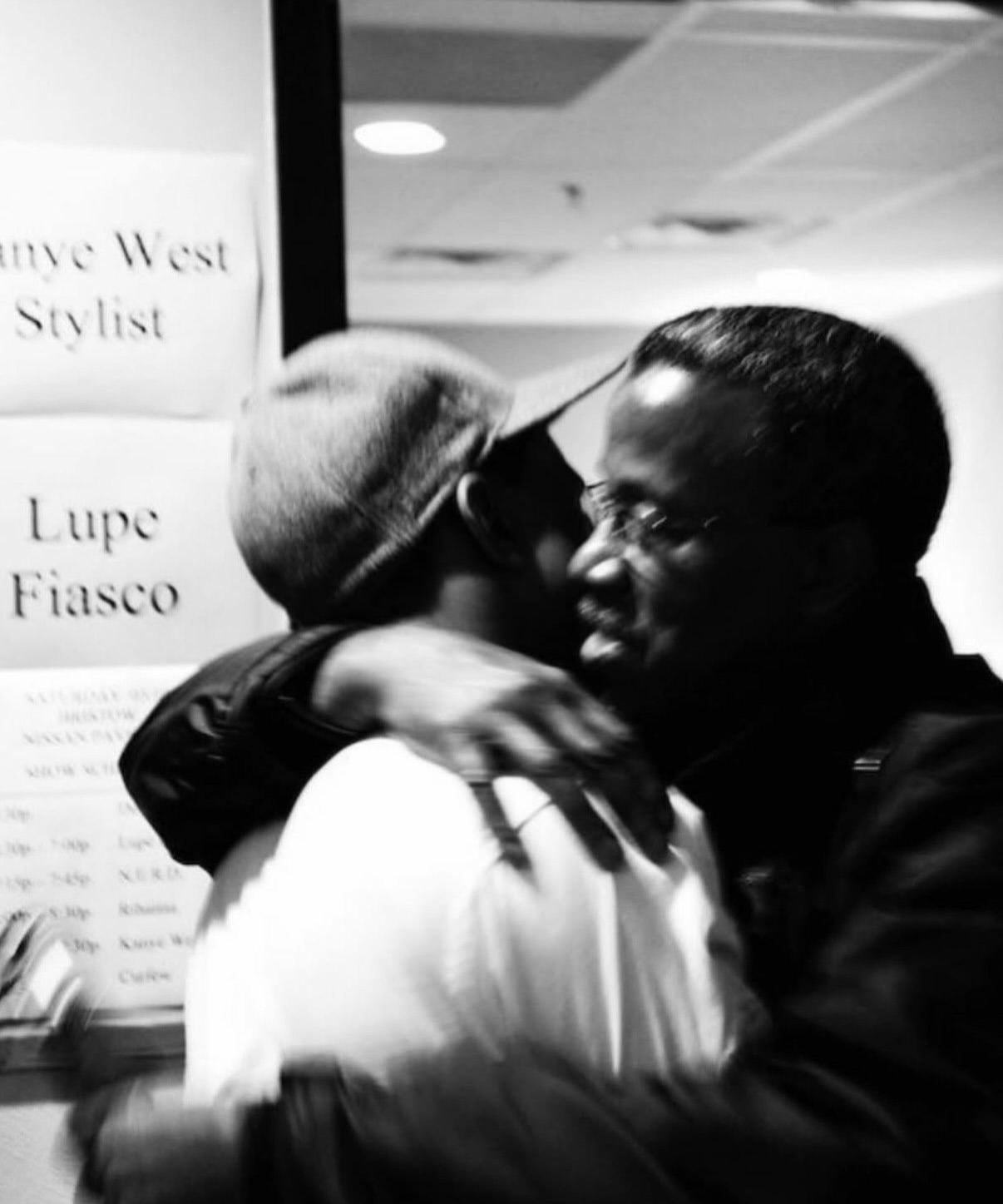
Inside the homes, hotel rooms, tours and early creative circles that helped shape a generation, Dee occupied a role that was difficult to define. He was a protector, organizer, tastemaker, friend and creative voice. He helped people feel safe, found rare clothing, organized closets and offered opinions that artists increasingly trusted. He stood beside Ian Connor, Playboi Carti, Fredo Santana, A$AP Rocky, A$AP Nast, Juice WRLD and others while their worlds expanded.
Now, separated from that physical world, Dee is thinking about what remains when proximity, access and visibility disappear. He is building House of Santiago through long phone calls, imagination and the support of people who still believe in him. What began as a clothing project has grown into an idea for something much larger, including consulting, home decor, prison reform and rehabilitation.
Through it all, Dee returns to one truth. He is still here. He is still fighting. And regardless of how his image has been interpreted, he believes the good he has put into the world is something no label, court or internet narrative can take away from him.
Editor’s note: Dee was given the option to skip any question involving his legal situation. 713 Magazine does not want this interview to interfere with any active proceedings or create additional legal difficulties for him.
713 Magazine: Before people knew the name Dee Santiago, what kind of person were you growing up?
Dee Santiago: I got into a lot of trouble, honestly. Around ten or eleven, I got caught up in a situation involving a police officer’s gun being stolen from their house. Since then, I was constantly in trouble. Even though I was a good kid, my environment was a harsh one, and I think I became a product of that.
713 Magazine: What was your relationship to New Orleans and the Magnolia Projects, and how did that environment shape you?
Dee Santiago: I was born in the Ninth Ward. I started hanging uptown because of my best friend, Killa Day. I basically lived at his family’s house, so the projects became all I knew. Most of my brothers, relationships and beefs came from me being known uptown. That era and that area made me a stronger person because the streets were critical in those days.
713 Magazine: What were you interested in growing up? Did you already see yourself becoming part of music or fashion?
Dee Santiago: I grew up fucking with martial arts. Five generations on my mom’s side participated in combat sports, and I still train in kickboxing to this day. But in seventh grade, I became addicted to Prada shoes. I think that was when I knew I was interested in fashion.
713 Magazine: Where did the name Dee Santiago come from, and what does that name represent to you?
Dee Santiago: My nickname has been Dee since I was little. Santiago is my dad’s last name. I always put him on a pedestal, and I wanted my name to be attached to his street legacy.
713 Magazine: How did you go from growing up in New Orleans to finding yourself inside the music and fashion world?
Dee Santiago: In 2010, I was really into Wiz Khalifa. He showed me that it was cool to just get high and get fly. That opened the door for me to start listening to Rocky and Tyler.
I became such a fan of Flacko that I would have conversations with him in my head before we ever met. Surprisingly, by 2015, I would be living with him and having those exact conversations in real life.
713 Magazine: Did you want to become a designer, artist or creative director yourself, or were you still discovering your place?
Dee Santiago: I’m not a designer. I just have the ability to create cool pieces. I always wanted to be a creative consultant. Once people started valuing my opinion, I wanted to impress them because I remembered when everybody thought crime was all I knew how to do.
713 Magazine: How did you initially meet Ian Connor, and what made the two of you become so close?
Dee Santiago: I met Ian at SXSW in 2013. I was already a fan when I introduced myself. He must have seen something in me because he gave me his number and told me to link with him the next day.
We spent the rest of that trip together. From then on, we would link whenever he was in town, and we gradually became close.
713 Magazine: Beyond what people saw in the photos and videos, what did your relationship with Carti actually look like during those early years?
Dee Santiago: Carti and I were like brothers. We still are. We did a lot together back then because we all lived in the same house.
We were sharing rooms at Fredo’s place or sleeping on the sofa at Rocky’s while spending five or ten thousand dollars on Supreme and Raf pieces. I think we would have rather paid for Rick Owens than a roof in those days.
713 Magazine: What do you remember about filming the “Broke Boi” video, and did any of you understand how important that moment would become?
Dee Santiago: That was shot around the time Carti was doing a lot of shows in Texas. The video was just a reflection of how spontaneously we were living. They shot every scene using what we already had on hand.
I think what made it resonate with so many kids was that you could tell a new era was being ushered in. There were no young guys in box logos and Ksubi denim with pipes in them at that time.
713 Magazine: What did your life actually look like at the height of that period, when you were traveling, surrounded by artists and becoming recognized yourself?
Dee Santiago: Back then, I was going wherever I was needed. Whether that meant doing security for Fredo Santana, helping Carti on tour or organizing closets with Rocky and Nast, I was there.
People started noticing that I had a style and energy as unique as the famous people around me. That made people pay more attention. It made me feel like the hood version of André Leon Talley.
713 Magazine: You were beside several people as their careers began taking off. How did you understand your own place within those rooms?
Dee Santiago: I was still figuring out what role I played and finding other ways to contribute. Everybody knew they were safer with me around. People also started noticing that I was a creative myself because I understood what was tasteful. That led to people valuing my opinions.
It’s crazy because that respect now spans generations, from Yachty and Ken Carson to Nettspend and Tezzus.
713 Magazine: How did you first meet Juice WRLD, and what was your relationship with him away from the music and public attention?
Dee Santiago: I met Juice through Lil Yachty in Atlanta. We smoked cigarettes and talked about our love for Chief Keef. It felt like we had known each other for years at that point.
Our relationship was basically us cooling in the house and getting high every day. I started helping him acquire pieces whenever he felt like shopping, and he put me onto a lot of the anime that influenced him. It was a genuine friendship.
713 Magazine: You once reflected on how you and Tay K had talents beyond the streets. Looking back, why do you think talent alone is not always enough to change someone’s circumstances?
Dee Santiago: What I meant was that Tay and I were beating the odds by even having interests outside of basic street shit. A lot of people in my neighborhood looked at me crazy for talking about fashion in 2012. It just wasn’t normalized yet.
Going outside the box gave us a better chance to thrive, even though it takes more than talent or interest to slip through the cracks. Where we come from, you need a little bit of luck too. There are a lot of guys on the yard better than LeBron who will never get that shine.
713 Magazine: There have been conflicting claims online about your case and its current status. If you are legally able to discuss it, what would you like to clarify?
Dee Santiago: All I can say is that I’m still here and I’m still fighting. At the end of the book, God knows my heart. Not the courts, and especially not the internet.
713 Magazine: What is it like watching the world you were once physically part of continue changing from a distance?
Dee Santiago: Some days, I’m happy not to be involved with that strange ass world. But I would give anything just to walk in the sun next to the people I love again.
713 Magazine: What have you learned about friendship and loyalty now that you cannot be physically present in the same way?
Dee Santiago: I knew it would be out of sight, out of mind from the beginning. When it comes to loyalty, I don’t know many wealthy people who feed their team the way they deserve.
I’m blessed to have loved ones in my corner who are able to do what they do for me. Even though sometimes I feel like I’m sinking while my friends sail past me in different sized ships, I know I just have to keep treading water until I get my feet back on land.
713 Magazine: When your physical world becomes smaller, where does your imagination go?
Dee Santiago: I imagine all the beautiful places I have been and all the beautiful pieces I have owned. Then I take my time immersing myself in the places and pieces I haven’t experienced yet.
713 Magazine: When did you begin calling yourself “A Guardian Angel,” and what does that identity mean to you?
Dee Santiago: Ian Connor gave me that moniker based on how I naturally put my safety, and sometimes my freedom, at stake to make sure others were okay.
To me, it represents having the heart to do what is honorable even when you are scared, alone or in danger.
713 Magazine: Which brands and designers first shaped your taste, and what are some of your personal favorites of all time?
Dee Santiago: In 2011, I was into a lot of streetwear brands, especially the original Supreme and Stüssy grails. Once Rocky and Cudi became my idols, I started studying Raf Simons and Alexander McQueen shows to gain a better understanding of that world.
To this day, Supreme, Gosha Rubchinskiy and Palace have made some of my favorite pieces of all time. Designers like Marc Jacobs, Demna, Kim Jones and Matthew Williams will always be on a pedestal for me.
713 Magazine: Are you still able to keep up with fashion today, and which current brands or designers have your attention?
Dee Santiago: Yeah, I still keep an eye out. Most of the things people own now come from aesthetics my circle had already explored. But now it’s less about brands because people are realizing that fashion is fleeting, while style is forever.
713 Magazine: Outside of fashion, what are you reading, listening to or learning about?
Dee Santiago: I’m so starved of beauty now that I find inspiration in the most random things, from classical pieces to lyrics from songs. I try to absorb anything that catches my attention.
My favorite things to read right now are books about manifestation and the subconscious mind. I also watch a lot of documentaries and listen to a lot of Aphex Twin.
713 Magazine: When did the idea for House of Santiago begin, and what made you feel it was finally time to create something under your own name?
Dee Santiago: I trademarked H.O.S. in 2017. I wanted to create something for the fans because people wanted to support something attached to me.
After I went down, I felt like the collaboration with FREEWATER gave people something that made us feel connected to each other.
713 Magazine: How are you able to guide the creative direction of House of Santiago from inside?
Dee Santiago: All credit is due to my LA brother, Terrence. He has been with me since 2015. We spend around fifteen hours a day on the phone perfecting things.
He understood the vision and understood that our first project had to be a quality product.
713 Magazine: When you imagine the next chapter of your life, what role does House of Santiago play in it?
Dee Santiago: In my mind, H.O.S. is a multifaceted company working across clothing, home decor and consulting. Hopefully, it can eventually move into more serious ventures like prison reform and rehabilitation.
In a perfect world, I would own a private prison that actually humanizes the process of reform.
713 Magazine: What question have you been waiting for someone to ask you or something you’ve wanted to say?
Dee Santiago: I truly believe that even though I get labeled a lot because of my image, I have done more good than bad on this earth. That is something no one can take away from me.
Explore House of Santiago and support Dee’s vision at houseofsantiago.com.