The Story Of Kanye’s Dad


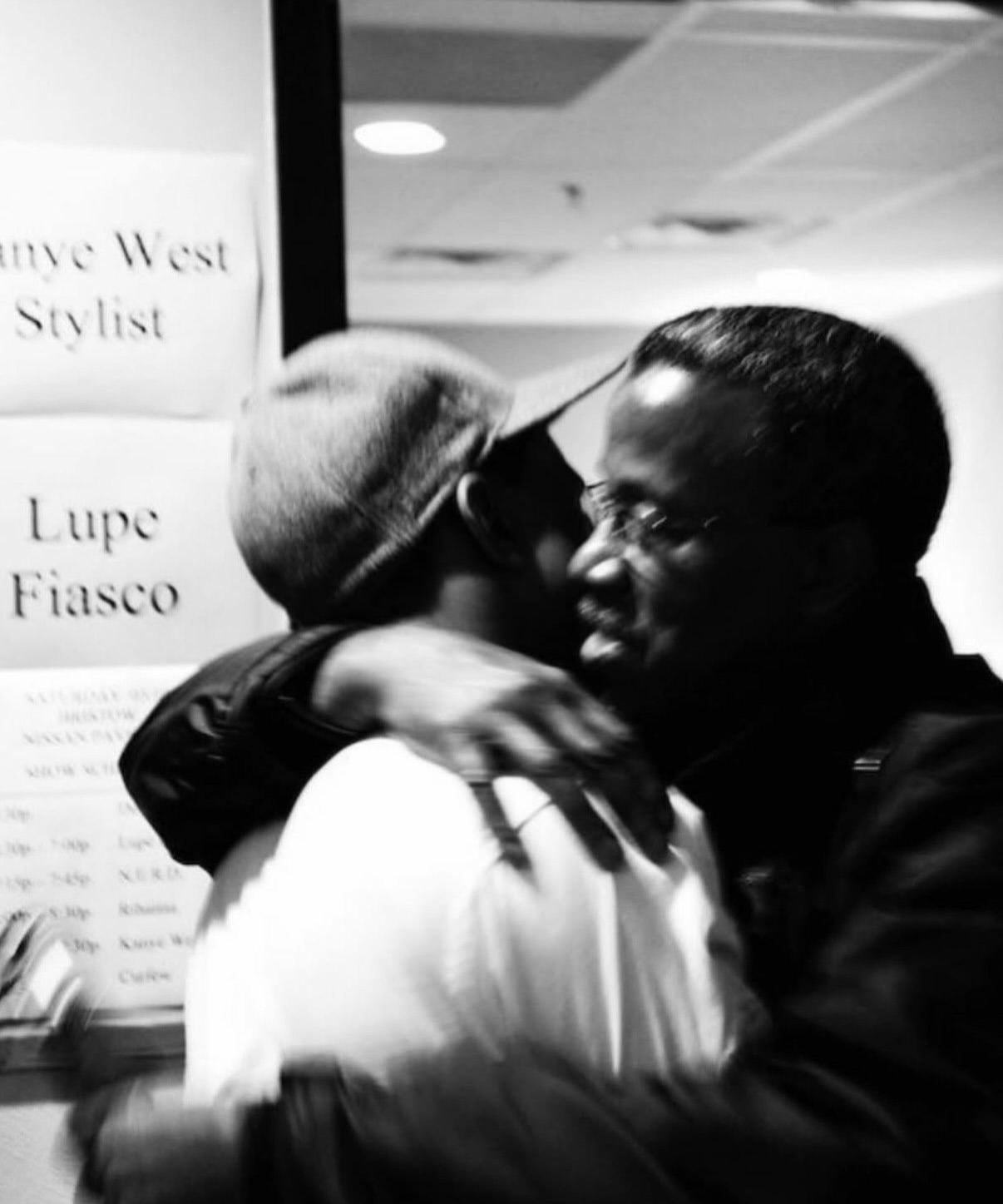
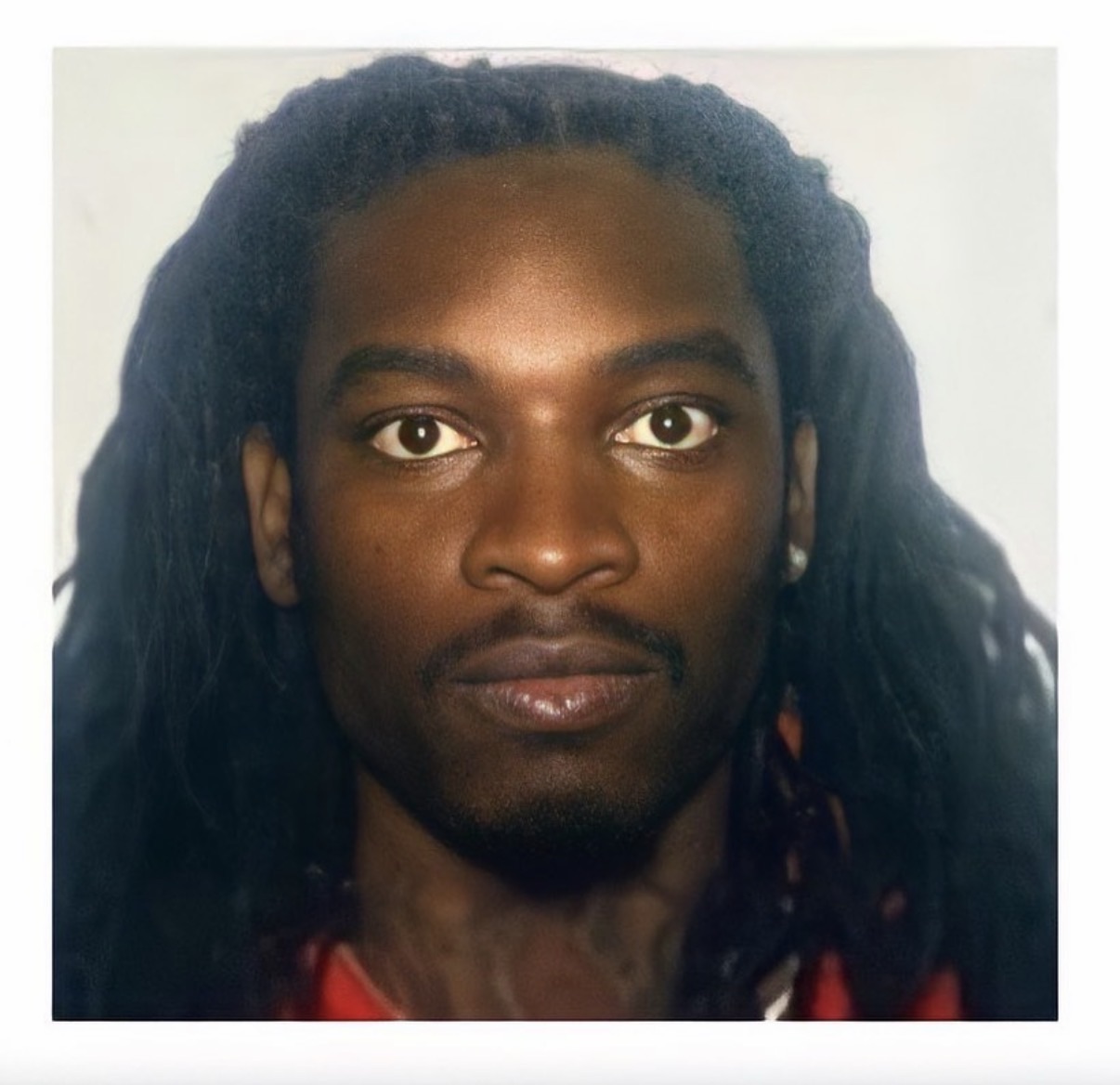
Long before Kanye West became one of the most documented artists in the world, his father had already spent decades moving between art, politics, business and service. Ray West had been a Black activist, photographer, newspaper photojournalist, entrepreneur, counselor and teacher before most people outside his immediate world ever knew his name. Today he is usually introduced through Kanye, reduced to a line about being a former Black Panther or one of the first Black photojournalists at The Atlanta Journal Constitution. Both details matter, but neither comes close to explaining the life he had already lived.
When Kanye sat down with Zane Lowe in 2013, he compressed much of his father’s story into a few sentences. “My father was a Black Panther, my father was a photo journalist. We had a dark room in our house.” He went on to describe Ray voluntarily living in a homeless shelter so he could work closely with people recovering from drug addiction, the creation of Good Water and his father’s eventual move to the Dominican Republic. Kanye was not simply sharing family trivia. He was explaining where part of himself came from. After talking about Ray and his mother Donda, he said that no award or Billboard achievement could take him beyond what his parents had already made him.
To understand what he meant, you have to go back decades before the music.
Ray West was born in Tucson, Arizona, into a military family. His father, James Frederick West, served in the United States Army, which meant Ray spent his childhood moving between different parts of America and overseas. Donda West later wrote in Raising Kanye that Ray lived in places including Arizona, Kansas, Delaware, New Mexico, Oklahoma and California, along with a period in Spain. He often found himself in predominantly white environments and later told Donda that he did not have a Black teacher until college. At the same time, race was impossible for the family to escape. Donda recalled stories Ray told her about his father being an Army sergeant and still struggling to find motel rooms for the family while traveling because they were Black.
By the time Ray reached the University of Delaware near the end of the 1960s, those experiences had developed into something more political. Donda remembered him becoming deeply involved in Black student organizing and eventually serving as president of the Black Student Government. University records from the period show a campus dealing with growing demands from Black students around representation, curriculum and institutional treatment. In April 1970, The Review, Delaware’s student newspaper, reported on an action in which Ray and other Black students occupied a campus lounge, declared the space liberated, screened Black Panther films and held symbolic proceedings centered on accusations of racism within the university.
The following year, Ray’s name appeared on the photography staff of that same newspaper. Politics and photography were already developing alongside one another. Ray would later be identified by Kanye and multiple published sources as a former member of the Black Panther Party. His exact chapter, position and dates of membership are harder to establish, but his involvement in Black student activism during this period is well documented.
Photography soon became the center of his life.
Ray met Donda Williams through a camera. She was working at Spelman College while continuing her own academic career when Ray was hired as an independent photographer to create images for school brochures and promotional material. In Raising Kanye, Donda remembered seeing his black and white photographs before really knowing him and being impressed by what he had made. Some of his travel photography had already received recognition, and she was drawn to his intelligence, creativity and determination to build something of his own.
They married, and on June 8, 1977, Kanye Omari West was born in Atlanta. Ray photographed his son from the beginning. The darkroom Kanye would later remember was not a small detail from childhood. Photography shaped the household. Ray processed his own film, thought seriously about available light and composition and documented the people around him with the same attention he brought to professional work.
His ambition eventually began shaping the family’s decisions as well. Donda wrote that she and Ray had been preparing to buy a house in Atlanta’s West End. They had qualified for a $125,000 mortgage and already placed $8,000 in earnest money toward the property when Ray found a commercial building that he believed could become the photography studio he wanted.
They chose the studio.
Ray called the business RaDonda, combining his name with Donda’s. The plan was to live upstairs while he operated the photography business below, allowing his work and family life to exist under the same roof. Donda initially believed in the idea too. If the studio succeeded, it could become the foundation for the life they were trying to build.
Instead, photography increasingly consumed Ray’s attention. Donda later remembered an argument in which he told her the studio had become more important than his wife and child. She wrote that he regretted saying it, but by then the tension between his ambition and their marriage had become difficult to ignore. They separated while Kanye was still very young, and their divorce became final in 1980, when he was three.
The familiar version of Kanye’s childhood usually moves directly from there to Chicago, where Donda became the central parent in his everyday life. She raised him, encouraged his creativity, shaped his education and eventually became one of the most important figures in the beginning of his career. What gets lost is that Ray did not simply disappear. Kanye continued spending time with his father, particularly during summers. Ray eventually moved from Atlanta to the Washington area, where The Washington Post later reported he lived for roughly two decades.
Before leaving Atlanta, Ray had also built the career that would become one of the most significant parts of his biography. He joined The Atlanta Journal Constitution and became one of the newspaper’s early Black photojournalists. His work placed him in front of figures including Ronald Reagan, Maya Angelou and civil rights leader Ralph David Abernathy, but some of the most revealing photographs were of ordinary life. Children in public housing, Atlanta neighborhoods, demonstrations, streets, businesses and people moving through a city changing around them.
There is something almost prophetic about that part of Ray’s story when viewed through what his son later became. Before Kanye was creating culture at a scale where almost every photograph of him could become a reference, Ray was already studying people through a lens. He understood how a frame could change meaning and how an ordinary moment could become historical once someone decided it was worth preserving.
He was watching culture before Kanye began making it.
Photography would not remain Ray’s only life. By 2001, he had moved to St. Mary’s County, Maryland, where he became the clinical director of a mental health clinic. He later taught sociology at the College of Southern Maryland. On paper, the transition from photojournalist to mental health work may seem abrupt, but Ray’s life rarely followed a straight professional line. He continued moving toward whatever problem or idea had begun occupying his attention.
Eventually that problem became water.
In November 2006, Ray opened the Good Water Store and Cafe in Lexington Park, Maryland. Good stood for Getting Out Our Dreams, the same phrase behind Kanye’s GOOD Music. Kanye’s charitable foundation lent money toward opening the business, but Ray’s idea stretched beyond simply selling water. The cafe offered different levels of purified water along with coffee, tea, smoothies and food prepared with purified water. It also included internet access and space for performances, giving the project a community element that went beyond a traditional store.
Ray spoke about Good Water as a way to make people think more seriously about what they consumed, how water was treated and how dramatically access to clean water differed around the world. What looked like a small cafe in Maryland was connected, in his mind, to a much larger issue.
He wanted Kanye thinking about those issues too.
By 2006, his son had become one of the biggest artists in music. Ray told The Washington Post that he wanted Kanye to connect his success with causes that existed beyond entertainment and products. He pointed toward Bono’s activism while Kanye was touring with U2 and encouraged his son to consider what could be done with a platform that large.
The following year, father and son put some of that thinking into practice. Ray organized a Walk for Water event in Maryland around World Water Day. Roughly 50 people participated, walking several miles to represent the distance people in water stressed regions may have to travel simply to obtain water. Kanye joined them and told The Washington Post that he and his father had been discussing the issue for years.
Around this same period came one of the most unusual chapters in Ray’s life. According to Kanye, his father voluntarily lived in a homeless shelter despite not being homeless himself. Kanye said Ray wanted to be close to people recovering from drug addiction so he could understand their circumstances and help them directly. The specific shelter, the length of Ray’s stay and many of the details remain difficult to independently verify, but the story came directly from Kanye and fits the direction Ray’s life had taken through counseling, mental health and community work.
Kanye later connected that experience to Good Water and his father’s eventual move to the Dominican Republic. Ray relocated there and continued pursuing clean water and humanitarian projects. Kanye spoke publicly about his father working toward a water purification facility, while people close to Ray later described him continuing to sell purified water and using the work to support community initiatives.
At a point when Kanye’s life had become almost impossibly public, Ray’s moved in the opposite direction. He lived outside the United States, continued working on projects that attracted little attention and rarely positioned himself as part of the celebrity world surrounding his son.
Then came cancer.
In 2018, Ray was diagnosed with prostate cancer and returned to the United States for treatment. Kanye spent time with him during that period, and later reports indicated that Ray had recovered. The following year their relationship became visible in a way it rarely had before when Ray appeared alongside Kanye in the video for “Follow God,” from Jesus Is King.
There is very little spectacle to the video. Father and son drive through the Wyoming snow, talk and spend time together. At one point, Ray tells a story about teaching his children how to move through deep snow by stepping into the footprints he had already made.
At the end of the video, Kanye reflected on his father visiting his ranch in Cody and wrote that it had taken him 42 years to realize his dad was his best friend.
That line lands differently once the rest of Ray’s story is known. Their relationship was not a simple one. Donda had been the parent beside Kanye every day and her influence remains impossible to separate from the person he became. Ray’s presence was quieter and more fragmented, but it was still there through summers together, photography, business ideas, social projects and the example of a man who repeatedly refused to remain one thing.
By the time Kanye released his first album, Ray had already spent decades becoming and abandoning different versions of himself. He had been an activist, photographer, businessman, newspaper photojournalist, counselor and teacher. Later came clean water advocacy, humanitarian work, cancer and a renewed closeness with his son.
Seen together, the parallels are difficult to miss. Ray believed in ownership. He moved between disciplines. He built things for himself. He became consumed by ideas and reorganized his life around them. He mixed creative work with business and social causes, often choosing uncertain projects over conventional stability.
Many of the qualities the world would eventually associate with Kanye existed in some form in his father decades earlier.
That is what gets lost when Ray West is introduced only as Kanye West’s dad. His story did not begin with his son’s fame. By then, he had already lived several lives of his own, mostly outside public view.
Before Kanye became Kanye, there was already a man in the family chasing ideas that seemed too large, changing professions, building things that did not fit neatly into existing categories and refusing to believe one life had to mean one identity.
His name was Ray West.